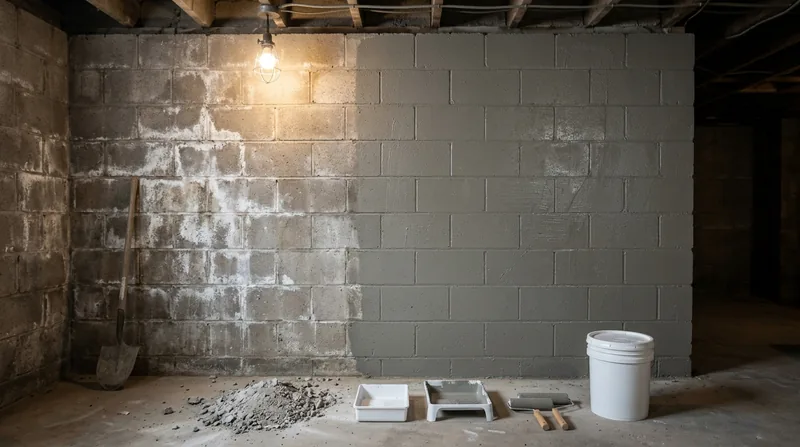




Wichita sits on the flat Arkansas River plain, where clay and silt soils over Permian shale hold water after every spring thunderstorm. In College Hill and Riverside, 1920s brick bungalows weep through old block and stone walls. Out in Maize and Andover, 2000s poured-concrete basements show damp patches along the cold joint. Basement Wall Sealing in Wichita starts with one honest question: is this minor dampness, or is hydrostatic pressure pushing water through the wall? We answer that before we sell anything. Basement waterproofing is a system, and sealing is one layer of it. Call (316) 867-9121 to get a free basement inspection and a straight answer.
Why Basement Wall Sealing Matters in Wichita's Clay and Shale
Wichita's expansive clay swells when wet and shrinks in drought, and the shallow water table near the Little Arkansas River keeps the soil charged. That cycle drives water against basement walls year after year. Efflorescence, the white salt bloom on brick and block, is the first visible sign. A musty basement smell usually follows. Sealing stops surface dampness and vapor movement through the wall, but it does not stop a wall that is actively leaking under pressure.
- Old brick and stone foundations in Delano and Bluffview wick groundwater through mortar joints and need parging repairs before any sealer goes on.
- 1950s to 1970s block walls in Haysville and Derby often show hairline cracks that let water in during flash flooding.
- Newer poured walls in Bel Aire and Goddard develop damp cold joints and form-tie holes that a penetrating sealer can close.
- Homes near Chisholm Creek and the Big Ditch floodway collect water in low spots, and wall seepage there usually points to a drainage problem, not a coating problem.
We tell you which category your wall falls into before we quote a sealer.
Key info: A 1930s bungalow in College Hill with damp block walls and no standing water is a sealing job. A 1960s ranch in Sunnyside with water running across the floor after every storm needs an interior drain tile system, not a coat of sealer. The inspection decides.
For official guidance on what work requires a permit in our area, check the City of Wichita building department before scheduling structural or drainage work.
How We Seal Basement Walls in Wichita Homes
We start by finding the source, not by rolling on a product. A moisture meter and a visual walk of the interior wall tell us whether the dampness is vapor diffusion, capillary action through the masonry, or active hydrostatic seepage. Each one gets a different prep and a different sealer. Skipping prep is why so many DIY sealer jobs fail within two seasons.
- We inspect the wall, the floor joint, and the exterior grade, and we note any crack wider than a hairline for separate repair.
- We remove efflorescence, loose mortar, and old failing coatings with wire brushes and a masonry cleaner.
- We repair spalled mortar joints and parge rough block or stone walls so the sealer has a sound surface to bond to.
- We apply a penetrating sealer for damp masonry, or a membrane coating where vapor transmission needs a flexible barrier.
- We check the exterior grade and downspout extensions, because sealing a wall while roof water dumps against it is wasted money.
If we find an active crack, we route you to foundation crack repair before sealing, since injection and coating solve different problems.
Key info: On a 1990s split-level in Andover, we found dampness along the cold joint and a downspout discharging two feet from the wall. We extended the downspout, sealed the joint, and the wall stayed dry through the next spring. The fix cost less than a full excavation quote the homeowner had already received.
Sealing Methods We Use and When Each One Fits
| Approach | Description | Best for |
|---|---|---|
| Penetrating sealer | Soaks into brick, block, or concrete and blocks capillary moisture without trapping vapor. | Damp masonry walls with efflorescence and no standing water. |
| Membrane coating | Flexible elastomeric barrier that bridges hairline cracks and resists mild pressure. | Poured walls with cold-joint dampness and form-tie holes. |
| Parging plus sealer | Mortar repair over spalled joints and rough stone, then a sealer coat. | Old brick and stone foundations in College Hill and Riverside. |
| Crack injection first | Epoxy or polyurethane injection closes an active leak before any coating. | Walls with a visible crack that leaks during rain. |
| Drainage correction | Grading, downspout extensions, and window well fixes that stop water at the source. | Low lots near Chisholm Creek where water ponds against the foundation. |
When the inspection shows hydrostatic pressure, we say so and point you to an interior drain tile system instead of a sealer that will fail.
Basement Wall Sealing Cost in Wichita: What to Expect
Most basement wall sealing jobs in Wichita start at $1,500 and go up from there. The number depends on wall length, how much prep the masonry needs, and whether we find active cracks or a drainage problem that has to be corrected first. A single damp wall on a block foundation is a different job from a full perimeter with parging and crack injection. We quote after the inspection, not over the phone.
- Wall length and height drive material and labor more than any other factor.
- Efflorescence removal and mortar repair on old brick add prep time and cost.
- Crack injection, if needed, is priced separately from the sealer.
- Access matters: a finished basement with paneling or drywall along the wall takes longer to work around.
Get two or three estimates and compare what each one includes, because a low bid that skips prep is not the same job. Our full pricing overview breaks down the ranges.
Basement Wall Sealing Near Me: How to Choose a Wichita Contractor
Plenty of outfits will sell you a sealer and disappear. A waterproofing contractor near Wichita should be able to explain why your wall is damp, show you the difference between vapor and pressure, and tell you when sealing is not the answer. Ask for proof of licensing and insurance, and get the certificate, not just a verbal yes. Check references from jobs in your part of town, and ask whether the company handles the drainage side too, because sealing alone rarely fixes a wet basement.
- Confirm the contractor is licensed and insured, and ask for a certificate of insurance before work starts.
- Get at least two written estimates that itemize prep, sealer type, and any crack repair.
- Ask for local references, ideally from homes with the same foundation type as yours.
- Ask who pulls any permit if the job touches structural repair or drainage connections.
- Check HOA rules in subdivisions like Bel Aire or Goddard before exterior drainage changes.
If a contractor cannot answer these questions plainly, keep looking. You can reach us through the contact page for a free inspection and a written scope.
Basement Wall Sealing in Wichita: Pricing Guide
| Service | Price | Details |
|---|---|---|
| Single wall penetrating sealer | Starting at $1,500 | Includes efflorescence removal, surface prep, and one coat on a single damp wall. |
| Full perimeter membrane coating | Starting at $2,800 | Covers all accessible walls with flexible membrane, priced by linear footage and prep. |
| Old brick or stone with parging | On estimate | Mortar repair and parging needed before sealing, so scope varies by wall condition. |
| Crack injection add-on | Starting at $450 | Epoxy or polyurethane injection for an active crack, priced per crack and depth. |
| Travel | Included | In Wichita and surrounding areas, no separate call-out or mileage fee. |
| Estimate | Free | Response within 24h at (316) 867-9121, no obligation to book. |
Indicative pricing, the exact cost depends on square footage, finish, and site access. Free personalized estimate within 24h at (316) 867-9121.


