



Vapor Barrier Installation in Wichita: Stop Ground Moisture Before It Ruins Your Basement
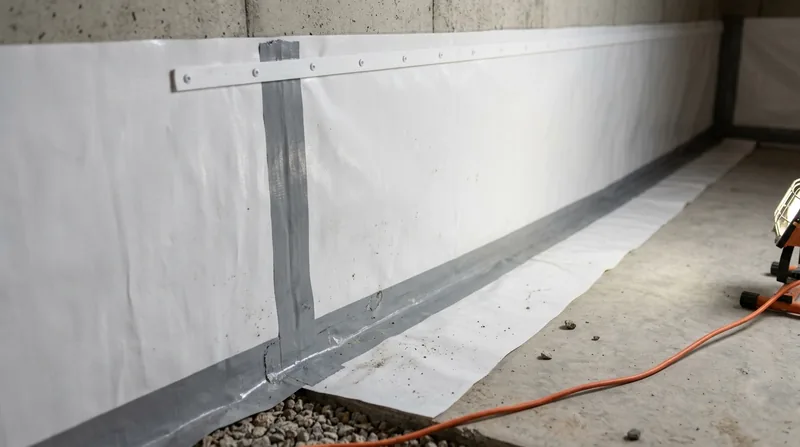
Wichita sits on the flat Arkansas River plain, where clay and silt soils over Permian shale hold water like a sponge after every spring thunderstorm. In College Hill and Riverside, 1920s brick bungalows with old block foundations wick that moisture straight through the wall. Out in Maize and Andover, newer poured-concrete basements still sweat because the soil stays damp and the water table rides high near the Little Arkansas. Vapor Barrier Installation in Wichita is how you cut that vapor off at the source: heavy-duty sheet membrane across the walls and slab, sealed seams, taped terminations, and sump integration where the floor needs it. We install it as a standalone fix or as the finishing layer on a full basement waterproofing job. If your lower level smells musty or the paint keeps blistering, this is the layer most homes are missing.
Why Vapor Barrier Installation Matters in Wichita's Clay and River Soil
Ground moisture in Wichita does not come from a single leak. It comes from clay soil that swells when wet and shrinks in drought, pushing vapor through block and brick walls year after year. The shallow water table near the Arkansas and Little Arkansas keeps the soil damp even in dry spells, and low spots near Chisholm Creek and the Big Ditch floodway collect water that never fully drains. A vapor barrier blocks that invisible vapor before it condenses on cool basement surfaces.
- You stop the musty basement smell that comes from damp concrete and framing.
- You keep efflorescence from blooming on block walls as soluble salts get pushed to the surface.
- You protect stored boxes, furniture, and mechanical equipment from constant humidity.
- You give any interior drain tile and sump system a dry surface to work against.
- You close the gap between a sealed wall and a damp slab that wicks moisture upward.
In short, the barrier handles the moisture the drain tile cannot see, and the two systems work best together.
Key info: A 1950s brick ranch in Haysville with a full basement and no barrier will show damp wall base and peeling floor paint every humid June. We see the same pattern in Delano and Bluffview bungalows with old stone footings.
For official guidance on moisture control and building performance, the U.S. Department of Energy moisture control guide is a solid reference homeowners can read before calling anyone.
How We Install Vapor Barriers in Wichita Basements
We start with a free basement inspection because the wall condition decides the method. A poured wall with hairline cracks gets crack repair first, then the barrier. A bowed or block wall in an older Wichita home may need stabilization before any sheet goes up. Once the surface is sound, we measure, cut, and seal the membrane in place so it stays tight through freeze-thaw cycles and summer humidity swings.
- We inspect the walls, slab, and sump area and note any active seepage or efflorescence.
- We repair cracks and patch rough parging so the barrier bonds to a clean, flat surface.
- We cut heavy-duty barrier sheets to fit wall height and floor runs, including corners and penetrations.
- We fasten the sheets with mechanical termination strips and seal every seam with compatible tape.
- We lap the wall membrane over the slab edge and tie it into the sump basin where one is present.
- We seal around pipes, columns, and window wells so no vapor path is left open.
- We test the finished surface and walk you through what to watch for in the first wet season.
Every job ends with a clean site and a clear explanation of how the barrier ties into your existing drainage.
Key info: In a Bel Aire subdivision home with a poured basement and an existing sump, we often lap the barrier into the basin and seal the rim so the pump pulls vapor from under the slab, not from the room.
If your floor already stays wet after rain, the barrier alone will not fix it. That is a drainage problem, and an interior drain tile system is usually the right first step before any membrane goes down.
Vapor Barrier Approaches We Use in Wichita
| Approach | Description | Best for |
|---|---|---|
| Wall sheet barrier | Heavy-duty membrane fastened to basement walls with sealed seams and taped terminations. | Block and brick walls with dampness and efflorescence. |
| Slab and wall wrap | Barrier lapped from the wall over the slab edge to close the floor-to-wall joint. | Basements with damp floors and cold joints at the cove. |
| Sump-integrated barrier | Membrane sealed into the sump basin rim so vapor is drawn from below the slab. | Homes with an existing sump pump and a damp floor. |
| Dimple board underlay | Drainage mat behind the barrier to give moisture a path down to the drain. | Wet walls tied to interior drain tile. |
| Barrier over crack repair | Epoxy or polyurethane injection first, then membrane over the repaired wall. | Poured walls with active seepage cracks. |
Vapor Barrier Installation Cost in Wichita: What to Expect
Most Wichita homeowners see pricing that starts from $3/sq ft for a standard wall and slab barrier with sealed seams. That figure covers material, fasteners, tape, and labor on a clean, sound wall. The number moves up when the job includes crack injection first, dimple board, sump integration, or extra prep on old brick and stone walls in College Hill and Riverside. Access matters too: a finished basement with paneling and shelving takes longer than an open block wall.
Square footage is the biggest driver, but wall condition is the one people forget. A wall with active seepage needs repair before the barrier goes up, and skipping that step just traps moisture behind the sheet. We give you a written scope so you know exactly what is included. For a broader look at how this work compares with other options, see our full pricing overview.
Getting two or three estimates is smart, and not just on price. Compare what each contractor includes: seam sealing, sump integration, crack repair, and cleanup. A low number that skips the crack work is not the same job.
How to Choose a Vapor Barrier Contractor Near Me in Wichita
Start by confirming the company is licensed and insured for basement work in Kansas, and ask for a certificate of insurance before anyone starts. Get at least two or three written estimates with a clear scope, not just a lump sum. Ask for local references from neighborhoods like Derby, Park City, or Goddard and follow up on them. Permits vary by jurisdiction for structural repair and drainage changes, so confirm with the local building department what your job requires. If your home is in an HOA, check the rules on exterior discharge and equipment before work begins.
We are a dedicated basement waterproofing specialist, not a general foundation firm or a plumber, and we will tell you plainly when a simple crack seal is enough. Call Wichita Waterproofing at (316) 867-9121 to schedule a free inspection.
Vapor Barrier Installation in Wichita: Pricing Guide
| Service | Price | Details |
|---|---|---|
| Wall sheet vapor barrier | Starting at $3/sq ft | Includes heavy-duty membrane, fasteners, sealed seams, and taped terminations on sound walls. |
| Slab and wall wrap | Starting at $4/sq ft | Adds floor-to-wall lap and cove sealing for basements with damp slabs and cold joints. |
| Sump-integrated barrier | Starting at $5/sq ft | Seals membrane into the sump basin rim; price rises with pump and discharge complexity. |
| Barrier over crack repair | On estimate | Injection repair must be scoped first, since crack count and wall condition vary widely. |
| Travel | Included | in Wichita and surrounding areas, no separate call-out or mileage fee |
| Estimate | Free | Response within 24h at (316) 867-9121, no obligation to book |
Indicative pricing, the exact cost depends on square footage, finish, and site access. Free personalized estimate within 24h at (316) 867-9121.


