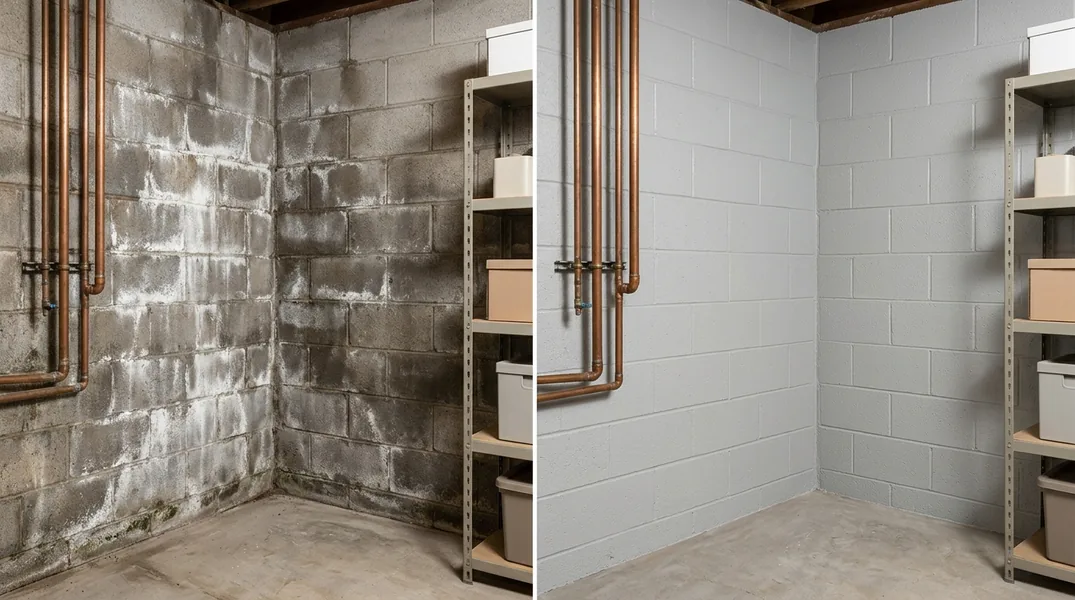
Why Wichita Basements Leak After Rain: The Clay and Water Table Connection
If your basement leaks every time it rains, you are not alone. Homeowners across Wichita face a one-two punch that few other regions deal with: expansive clay soil and a shallow water table. Understanding how these two forces work together is the first step toward a dry basement.
The soil around most Wichita homes is heavy Kansas clay. Unlike sandy or loamy soils that drain quickly, clay particles are tiny and tightly packed. When water hits clay, it does not soak in readily. Instead, the clay absorbs water slowly and swells, expanding in volume. This swelling clay foundation cracks are a common sight in older neighborhoods and even in newer builds. As the clay expands, it pushes against your foundation walls with tremendous force. When the pressure exceeds what your foundation can handle, cracks form. Those cracks become pathways for water to enter your basement.
At the same time, Wichita sits over a relatively shallow water table. During dry spells, the water table drops, but after heavy spring and summer rains, it rises quickly. When the water table rises above your footing drains or the base of your foundation, hydrostatic pressure builds. Water seeks the path of least resistance, and that path is often through the same cracks caused by swelling clay. This is why many Sedgwick County basement leaks appear suddenly after a soaking rain, even if the basement has been dry for years.
How Swelling Clay and Soil Movement Damage Your Foundation
Swelling clay does more than just crack walls. It causes soil movement that shifts the ground beneath and around your foundation. As the clay expands and contracts with wet and dry cycles, it creates uneven pressure. One side of your foundation may be pushed inward while another side is pulled away, leading to bowing walls, floor cracks, and sticking doors or windows. Over time, this movement can compromise the structural integrity of your home.
Soil movement also affects the drainage around your foundation. When clay swells, it can close off the natural drainage paths that would normally carry water away from your home. Water then pools against the foundation, increasing the risk of leaks. In many Wichita homes, the combination of swelling clay and poor drainage creates a perfect storm for basement water problems. If you notice cracks in your foundation walls, especially horizontal cracks or stair-step cracks, it is a sign that the soil is moving and your foundation is under stress.
Ignoring these signs can lead to expensive repairs down the road. The good news is that Foundation Waterproofing can address both the symptoms and the underlying causes. A professional assessment will determine whether the cracks are cosmetic or structural and recommend the right solution.
Sedgwick County Basement Leaks: Why They Keep Coming Back
Many homeowners in Sedgwick County try to fix basement leaks with DIY methods like hydraulic cement, sealants, or exterior grading. While these can provide temporary relief, they rarely solve the problem permanently. That is because the root cause is not just a single crack; it is the combination of clay soil, water table fluctuations, and hydrostatic pressure. If you seal one crack, water will find another path. The pressure from the outside will eventually force its way through.
Another reason leaks return is that water trapped in the clay soil has nowhere to go. Without a proper drainage system to collect and redirect water away from the foundation, it will continue to build up. This is why a comprehensive approach is necessary. Solutions like an Interior Drain Tile System can capture water that enters the basement and channel it to a sump pump, while Exterior Basement Waterproofing addresses the problem from the outside by creating a barrier and improving drainage. For many Wichita homes, a combination of both may be the best strategy.
It is also important to address the soil movement itself. In some cases, foundation repair may be needed before waterproofing can be effective. A professional contractor can evaluate the situation and recommend a plan that includes Basement Waterproofing and any necessary structural repairs.
Basement Waterproofing Near Me: When to Call a Professional
If you have noticed water stains on your basement walls, a musty odor, or actual standing water after rain, it is time to call a professional. These signs indicate that water is already finding its way in, and the problem will only get worse. DIY fixes are not designed to handle the hydrostatic pressure and soil movement common in Wichita. A professional waterproofing contractor has the tools and expertise to diagnose the issue accurately and recommend a lasting solution.
When searching for 'basement waterproofing near me' in Wichita, look for a company with local experience. Contractors who understand Kansas clay soil and the local water table are better equipped to design a solution that works for your specific situation. Ask about their approach: do they offer interior drain tile, exterior waterproofing, or both? Do they provide a warranty? A reputable company will be transparent about their process and pricing. At Wichita Waterproofing, we offer free estimate inspections to help you understand your options. Call us at (316) 867-9121 to schedule yours.
Long-Term Solutions for Wichita's Unique Soil Conditions
The most effective waterproofing strategy for Wichita homes addresses both water and soil. Interior drain tile systems are excellent for managing water that has already entered the basement, but they do not stop the soil from pushing against your foundation. Exterior waterproofing, on the other hand, involves excavating around the foundation to apply a waterproof membrane and install drainage. This relieves pressure and prevents water from ever reaching the basement. However, it is more invasive and costly.
In many cases, a combination of approaches works best. For example, exterior waterproofing can protect the foundation from swelling clay, while interior drain tile handles any water that still seeps in. Additionally, improving grading and downspout drainage can help keep water away from the foundation. If soil movement has caused significant cracks, foundation repair may be necessary before waterproofing. A professional contractor will assess your home and recommend a customized plan. With the right solution, you can protect your basement from Wichita's challenging soil and water table for years to come.
Looking for a professional basement waterproofing contractor in Wichita? Wichita Waterproofing responds fast for all your basement waterproofing needs.
Get a Free QuoteOur services: Basement Waterproofing · Interior Drain Tile System · Exterior Basement Waterproofing