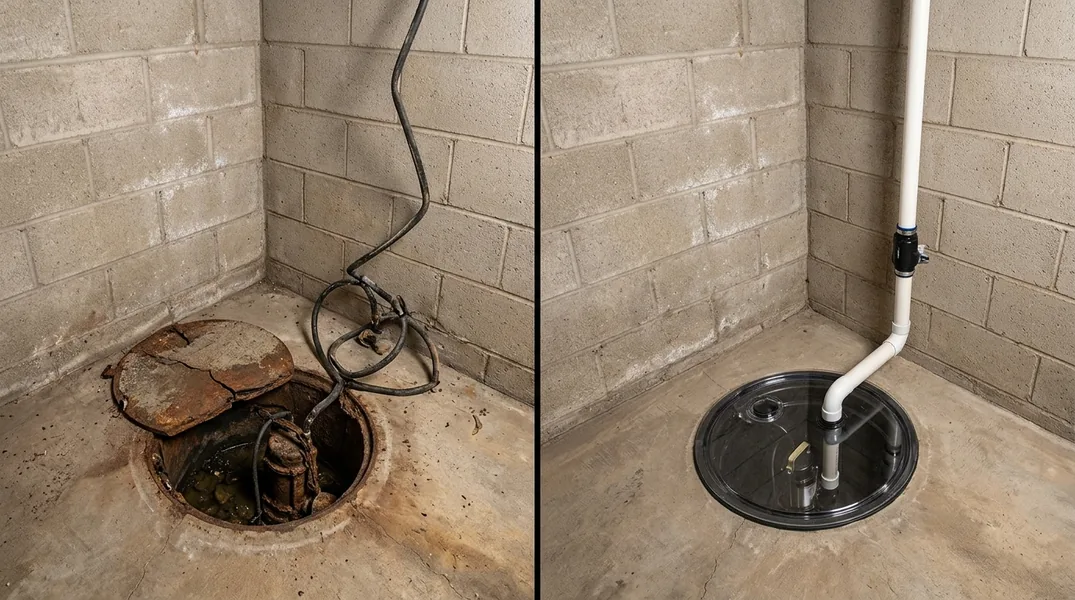
Why Spring Storms Put Your Sump Pump to the Test
Kansas spring weather is famously unpredictable. Warm Gulf moisture collides with cold Canadian air right over the plains, and the result is often intense thunderstorms that drop inches of rain in a matter of hours. For homeowners in Wichita, that means the water table can rise quickly, and the soil around your foundation can become saturated faster than it can drain. Your sump pump is the last line of defense between that water and your basement floor.
Most sump pumps sit idle for months during the dry winter. When the first big storm hits, a pump that hasn't been checked can fail at the worst possible moment. The motor may seize, the float switch may stick, or the discharge line may be clogged with debris. A few hours of preventive maintenance in early spring can save you thousands of dollars in water damage and mold remediation. It's one of the simplest investments you can make in your home's health.
Sump Pump Maintenance Checklist for Wichita Homeowners
Start by unplugging the pump and removing the lid from the sump pit. Look inside for debris, silt, or small toys that may have fallen in. Clean the pit with a wet/dry vacuum if needed. Then check the float switch by lifting it manually to see if the pump kicks on. If it doesn't, the switch may be stuck or the pump may be failing. Test the pump by pouring a bucket of water into the pit and watching how quickly it empties. A pump that struggles or runs loudly is a warning sign.
Next, inspect the discharge pipe and the Basement Waterproofing system it connects to. Make sure the pipe is not frozen, kinked, or clogged. The water should be directed well away from the foundation, ideally several feet from the house. If your discharge line runs underground, check the exit point for blockages. Finally, listen to the pump while it runs. Grinding, rattling, or intermittent operation means it's time to call a professional for a closer look.
Don't Overlook the Sump Pump Check Valve
The sump pump check valve is a small but critical component. It prevents water from flowing back into the pit after the pump shuts off. Without a working check valve, the pump cycles on and off repeatedly, which shortens its life and can flood the pit during a power outage. Inspect the valve for mineral buildup or cracks. If it's more than a few years old, replace it. It's an inexpensive part that can prevent a lot of headaches.
While you're checking the valve, also verify that the weep hole (a small hole drilled in the discharge pipe just above the pump) is clear. This hole relieves air pressure and prevents air locks. If it's clogged, the pump may run but move very little water. A quick cleaning with a paper clip or small wire can restore proper function. These small details matter when a storm is dumping rain on your roof and the ground is already saturated.
Battery Backup Sump Pump: Your Safety Net During Power Outages
Spring storms in Kansas often bring lightning that knocks out power. When the electricity goes out, a standard sump pump stops working, and that's exactly when you need it most. A battery backup sump pump runs on a charged battery and automatically takes over when the primary pump loses power or fails. It's an essential upgrade for any home with a finished basement or valuable storage.
Test your backup system before storm season. Check the battery water level (if it's a wet-cell type), clean the terminals, and run a manual test cycle. Most backup batteries last three to five years. If yours is older, replace it. Also confirm that the backup pump's float switch moves freely and that its discharge line is separate from the main pump's line. A backup system that hasn't been tested is only a false sense of security. For homeowners in Derby and Haysville, where power outages can last for hours, this is especially important.
When to Call a Pro: Sump Pump Maintenance Near Me
Some maintenance tasks are DIY-friendly, but others require an expert eye. If your pump is more than seven years old, runs constantly, or has visible rust or corrosion, it's time to consider a replacement. A professional can also evaluate your entire Interior Drain Tile System and Foundation Waterproofing setup to ensure everything works together. Sometimes a failing sump pump is a symptom of a larger drainage issue that needs Exterior Basement Waterproofing or a new tile system.
If you're searching for "sump pump maintenance near me" in the Wichita area, call Wichita Waterproofing at (316) 867-9121. We can inspect your pump, test the check valve, and recommend a battery backup system that fits your budget. We also serve Park City and surrounding communities. Don't wait for the first thunderstorm to find out your pump isn't ready. Schedule a free estimate today and get peace of mind before the spring rains arrive.
Looking for a professional basement waterproofing contractor in Wichita? Wichita Waterproofing responds fast for all your basement waterproofing needs.
Get a Free QuoteOur services: Basement Waterproofing · Interior Drain Tile System · Exterior Basement Waterproofing